




Take A Look Inside Super Sunday of Qualifying at Indy

Curt Cavin
INDYCAR Staff Writer
MAY 17, 2026
Alex Palou survived one of the worst qualifying positions Sunday to emerge as the top qualifier for this year’s Indianapolis 500 presented by Gainbridge.
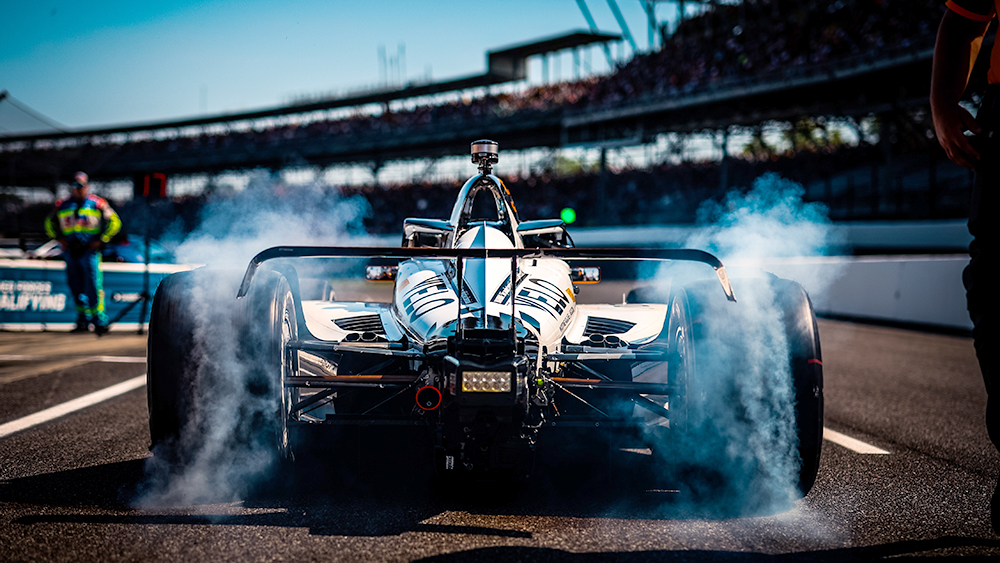
The Spaniard was the 31st driver to qualify in the first round, but he ended up No. 1 for the second time in four years. Palou’s performance in the three rounds of PPG Presents Armed Forces Qualifying was steady, smooth and faster than any other NTT INDYCAR SERIES driver when it mattered most at Indianapolis Motor Speedway.
Here are five elements to a single-day qualifying session that saw 33 hopefuls trimmed to 12 and then six before Palou again captured the NTT P1 Award.
The Road to the Front
With rain erasing Saturday’s opportunity to stage qualifying, the revised format created a rare one-day field-setting session.
All 33 car-and-driver combinations were permitted one chance to keep themselves in contention for the prestigious pole, and delivering four quality laps on a hot and windy day wasn’t for the faint of heart despite the assurance that no one would fail to start the race Sunday, May 24 (FOX, FOX Deportes, FOX One, INDYCAR Radio powered by OnlyBulls).
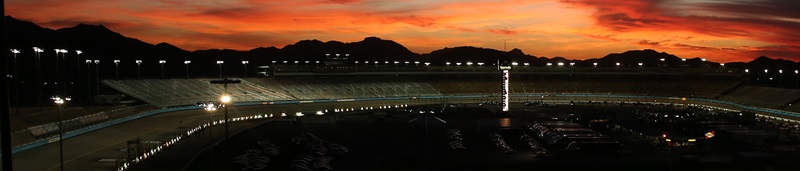
For the first time this week, the sun baked the historical oval, the asphalt already at 97.7 degrees when qualifying began at noon ET. By the time reigning “500” champion Palou finally got his chance to qualify, nearly 15 degrees had been added to the track’s surface.
The IMS oval has always been temperature sensitive, and Sunday displayed that in spades. David Malukas was the 19th qualifier in Round 1 with Alexander Rossi following him. Their first laps were separated by only a few minutes but nearly 2 degrees of track temperature.
The warm track made for slippery corners, and it was immediately clear the drivers had to adjust on the fly as tire grip lessened. Ed Carpenter, a three-time Indy pole winner, had to outright lift on his first-round run, the culprit for him not joining ECR teammate Rossi in the Top 12.
The conditions were more level in the second round, largely because there were fewer competitors over a shorter period of time. Kyffin Simpson was the first to run at 4:15 p.m., and the track showed 110.8 degrees. Rosenqvist was the last of the group to go at about 5:25 p.m., and with shadows covering part of the track he faced a more reasonable 105.3 degrees.
The playing field was even more level for the Firestone Fast Six, with just 2.8 degrees of track temperature reduction over the session.
Looking in From the Outside
When the first “500” was held in 1911, drivers were put on the starting line based on when their car’s entry form had been received. That led to Lewis Strang starting on the pole with car number 1. In the race, the New Yorker completed just over half of the laps and finished 29th. Meanwhile, winner Ray Harroun, a Pennsylvanian, took the green flag in 28th and had the lead by Lap 103.
The best odds to win the “500” favor drivers starting in the top six – nearly two-thirds of the winners have come from one of those positions, including Palou last year from the sixth spot – but winners have started in 24 different starting positions, and this is a deep, deep field.
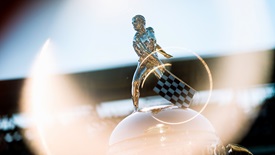
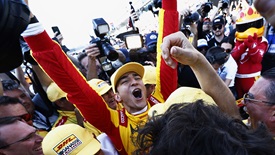
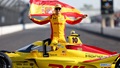
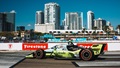
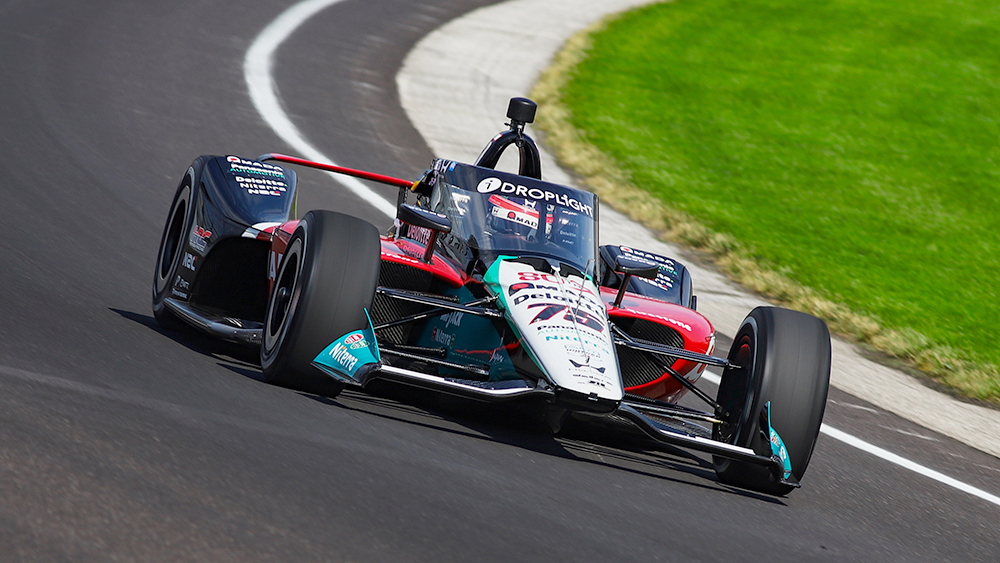
Seven of the nine former winners will start next Sunday’s race in the back eight rows. But it wouldn’t be wise to discount any of them, particularly those in Row 4 and Row 5, where Takuma Sato (2017, 2020; photo, above) and Helio Castroneves (2001, 2002, 2009, 2021) have combined for six wins.
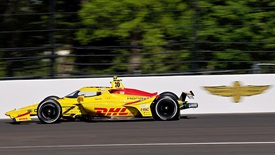
Marcus Ericsson, the 2022 winner, will start 17th, two positions and a row ahead of Will Power (2018). Ryan Hunter-Reay (2014) and Josef Newgarden (2023, 2024) will occupy Row 8 in the 22nd and 23rd positions, respectively. Each of them is capable of winning next weekend, in part because chassis setups for race conditions will be significantly different and experience matters in this race of at least five pit stops and 200 laps.
Using Hybrid Technology in Different Ways
When the hybrid system was used at Indy for the first time last year, there didn’t seem to be much variance in how the competitors used it. Not this year.
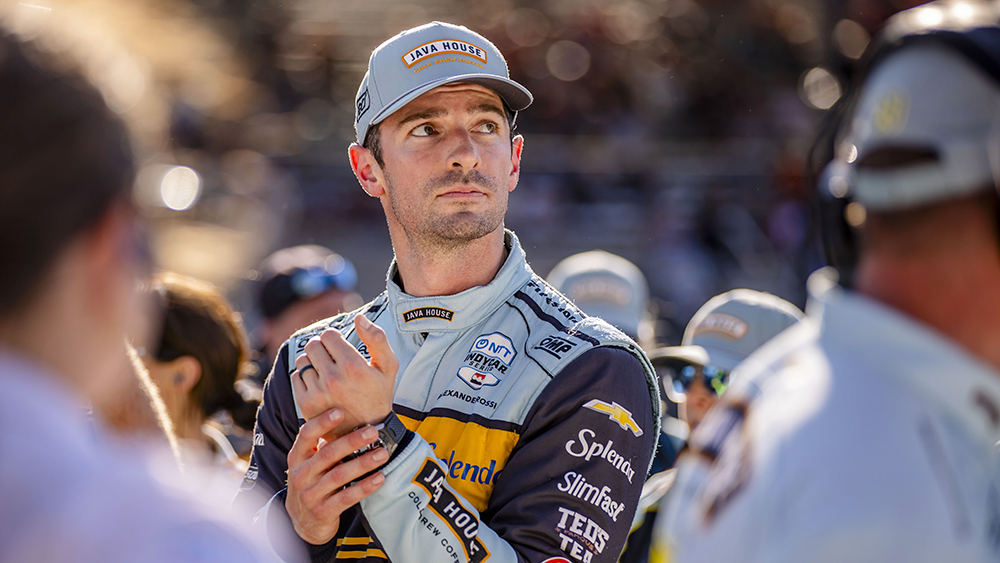
The regeneration and deployment of the additional horsepower added intrigue to these qualifying runs. Some drivers used it with great regularity; others, like Rossi (photo, above), didn’t appear to use it much at all. Drivers were active with it at both ends of the track, too.
One issue with the hybrid strategy is that it is only visible by watching on-screen graphics, but FOX analysts James Hinchcliffe and Townsend Bell kept a watchful eye on how the drivers worked their tools, and it was fascinating.
As expected, the drivers were tight-lipped on what they considered the optimal usage, but we would expect nothing less in this competitive environment. It will be interesting to see how teams use the hybrid in the race.
Late Rounds Something To Behold
The Top 12 and Firestone Fast Six sessions offered drivers on the edge without stepping over it. There were no accidents or wall scrapes, a trend this week. Sato’s brush of the short chute wall exiting Turn 3 in pre-qualifying practice today has been the only contact at this event.
Felix Rosenqvist led the Top 12 coming in and coming out. In the first round, he had the only 232-mph average, a day-best 232.599 mph. Proof of a tight field came in the form of the other 11 members of the second round qualifying in the 231-mph bracket.
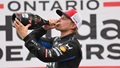
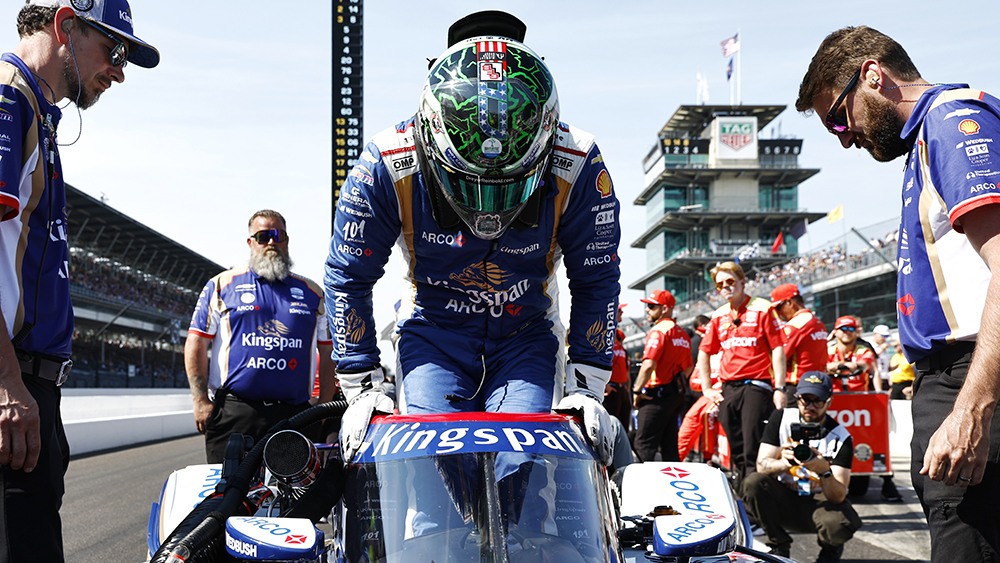
Caio Collet, who finished second in last year’s INDY NXT by Firestone standings, was the lone rookie to reach the Top 12, but he dropped from seventh to 10th in the round and later in the evening was moved to the 32nd position for a technical violation. Conor Daly (photo, above) entered with the third-fastest speed, but he fell to eighth, which is still a career-best following a pair of 11ths. Rinus VeeKay dropped from fifth to 12th, climbing to 11th after Collet’s technical violation.
Palou was the big gainer both in terms of position – he entered 11th and exited second – but he also was the only driver in the Top 12 to improve his time from the first round.
Joining Rosenqvist and Palou in the Firestone Fast Six were David Malukas, Santino Ferrucci, Pato O’Ward and Rossi.
Six Drivers, Six Teams in Firestone Fast Six
Rossi said he didn’t think he could run fast enough to jump from the sixth spot to earn a place on the front row, but he was wrong as his first two laps of the session were in the 232-mph bracket. The ECR driver held the top spot as O’Ward (Arrow McLaren), Ferrucci (AJ Foyt Racing) and Malukas (Team Penske) took shots at him.
Palou also had a pair of 232-mph laps, including a first lap of 232.848 mph. With a four-lap average of 232.248 mph, the Chip Ganassi Racing driver stood on pit road to watch Rosenqvist try to improve on his Top 12 effort (232.065 mph). Rosenqvist had posted a 232.599-mph average in Round 1, but the driver representing Meyer Shank Racing w/Curb Agajanian couldn’t match Palou, and he settled for the fourth starting position.
Palou started sixth in last year’s race, and the average starting position of Indy’s race winner over the past decade is 6.1. So, the odds are good for any of these six.
But again, it’s a deep field. There are probably two dozen drivers who believe they have a chance to win. Of course, only one can. They’ll have to pass Palou to do it.